

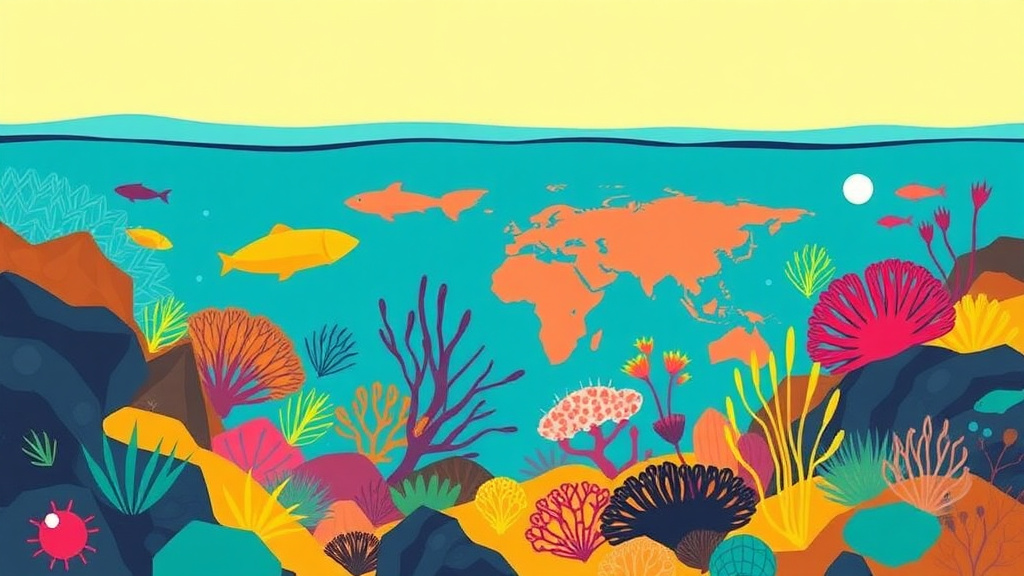
The ocean, once a ostensibly endless wellspring of life and nourishment, faces an unparalleled emergency that most overlook. Ocean acidification—a primary outcome of rising atmospheric carbon dioxide—is fundamentally altering marine chemistry, threatening the continued existence of countless species and undermining food chains that billions depend upon. This silent transformation is restructuring ecosystems from coral environments to offshore waters, with impacts that reach well beyond aquatic borders. Grasping this intricate danger is vital for safeguarding both sea life and global food security.
The Science of Oceanic Acid Increase
Ocean acidification takes place when carbon dioxide in the air dissolves into seawater, forming carbonic acid. Since the Industrial Revolution, atmospheric CO₂ levels have risen by over 50%, leading the ocean to take in approximately 30% of this excess carbon dioxide. This chemical process reduces the ocean’s pH level, making it more acidic. The change might appear modest—a 0.1 unit drop on the pH scale—yet this constitutes a 30% increase in acidity, fundamentally altering the ocean’s chemical composition and creating stress for numerous marine species.
The consequences of this acidification cascade through marine ecosystems in several ways. Lower pH levels limit the presence of carbonate ions, essential minerals that organisms that build shells like mollusks, crustaceans, and corals use to create their protective coverings. Additionally, acidification affects fish sensory systems and metabolism, undermining the fragile balance that maintains marine food webs. These chemical alterations occur swiftly—far quicker than many species can evolutionarily adapt—making ocean acidification one of the most pressing environmental challenges facing our planet at present.
Impact on Ocean Ecosystems
Ocean acidification significantly alters the intricate equilibrium of marine ecosystems by changing pH levels that many life forms depend upon for continued survival. As pH levels drop, the ocean’s capacity to sustain diverse life forms reduces significantly. From tiny plankton to massive whales, species face unprecedented physiological stress. The rippling consequences propagate throughout food webs, threatening predator and prey relationships alike. This chemical shift destabilizes the ecological balance that has supported ocean life for millennia.
Shell-Building Organisms in Danger
Organisms that create shells and skeletons from CaCO3 face critical dangers in increasingly acidic waters. Pteropods, mollusks, echinoderms, and numerous crustaceans have difficulty forming and sustain their defensive shells as ocean chemistry becomes increasingly hostile. The effort needed for building shells increases dramatically, diverting resources from growth, reproduction, and survival. Experimental evidence show shell dissolution and growth defects in low-pH environments. These vulnerable creatures form the foundation of ocean food chains, making their reduction catastrophic for whole marine systems.
Coral reefs, often described as rainforests of the sea, face especially serious consequences from acidification of oceans. Corals require calcium carbonate to construct their complex skeletons, yet acidified waters make this process demanding of energy and chemically challenging. Coral bleaching events, already heightened by temperature increases, work together with acidification stress to devastate reef communities. The loss of coral ecosystems eliminates essential habitat for thousands of fish and invertebrate species. Without immediate action, many coral reefs might be lost entirely within decades.
- Pteropods dissolve in acidic seawater conditions rapidly.
- Oyster larvae experience reduced shell growth rates substantially.
- Sea urchin growth becomes severely impaired and abnormal.
- Foraminifera populations decline due to weakened shells.
- Crustacean exoskeletons become more delicate and more fragile.
Threats to Global Food Security
Ocean acidification poses a direct threat to the seafood industry and the approximately three billion people who rely on marine resources for protein. As ocean pH levels drop, shellfish and mollusks have difficulty forming their protective shells, while fish populations face interrupted breeding and movement cycles. Commercial fisheries that produce over $150 billion annually face declining catches, threatening livelihoods and food supplies in seaside regions worldwide.
The economic consequences go further than fishing communities to worldwide food networks and consumer prices. Developing nations, especially in Southeast Asia and Africa, face the most severe consequences as they depend significantly on marine protein sources. Rising production costs paired with reduced yields form a critical convergence that will worsen food shortages, exacerbate poverty, and potentially trigger geopolitical tensions over dwindling marine resources.
Solutions and Emerging Prospects
Addressing ocean acidification necessitates broad international efforts centered on reducing carbon dioxide emissions. Shifting toward renewable energy sources, enforcing tougher environmental regulations, and advancing eco-friendly manufacturing methods are vital actions. Additionally, marine protected areas and recovery programs can enhance ecosystem resilience and help species adapt to shifting environments. Worldwide partnership through agreements like the Paris Climate Accord shows growing recognition of this pressing crisis and dedication to substantive ecological safeguarding.
Moving forward, new technological advances offer promising solutions for mitigating acidification impacts. Scientists are creating alkalinity enhancement techniques and exploring artificial upwelling methods to stabilize ocean chemistry. At the same time, ongoing studies into acid-tolerant farming and selective breeding of resilient marine species provides hope for food security. Success depends on immediate action combining emission reduction with innovative adaptation strategies, guaranteeing future generations receive thriving oceans and stable food systems.
